
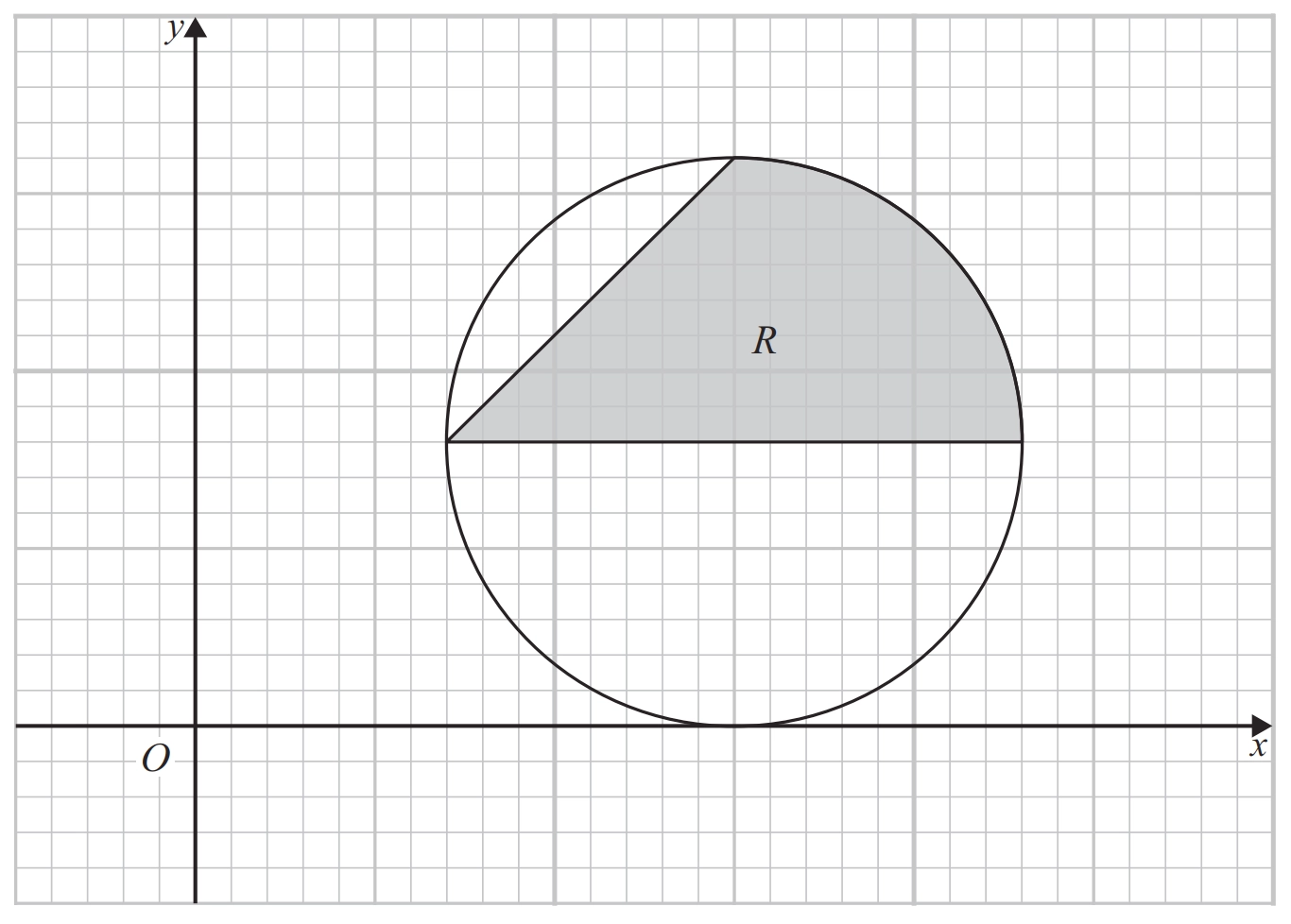
Figure 2 shows an Argand diagram for complex numbers of the form . The diagram is drawn accurately, although the scale is not shown on the axes.
Complex numbers that lie in the region , shown shaded in Figure 2, satisfy all three of the inequalities
where , and are real numbers.
(a) Determine the value of , the value of and the value of
Given that the complex number lies in the region ,
(b) determine the exact range of possible values of
(c) determine the minimum value of , giving the answer in radians to 3 significant figures.
解答
(a)
From the diagram and the inequalities:
-
is a circle with centre and radius . From Figure 2, the circle is tangent to the real axis, meaning the radius is equal to the imaginary part of the centre. Therefore, .
-
represents the region bounded by a half-line starting at . Looking at the shape of the shaded region , it lies below the line passing through and . The slope is . The angle is . Therefore, .
-
represents a half-plane defined by the perpendicular bisector of the line segment between and . Since the top boundary of is a horizontal straight line passing through the centre of the circle , the perpendicular bisector of and must be the line . The distance from to is . Thus, must be at . Therefore, .
(b)
The complex number lies in . The distance from the origin is minimised at the intersection of the line and the horizontal line . This point is .
The maximum distance occurs at the furthest point on the circular boundary. Since is the top half of the circle , the furthest point from the origin that lies on the circle passes through the extended line from the origin to the centre . Distance to centre . The furthest point on the entire circle is . This point lies in the upper half of the circle (as ), so it is within .
Thus, the exact range of possible values is:
(c)
The minimum value of occurs at the rightmost point of the region , which is the intersection of the circle with the horizontal line . The circle has centre and radius . The points on the circle where are and , which are and . The point that yields the minimum argument is .