In this question you must show all stages of your working. Solutions relying entirely on calculator technology are not acceptable.
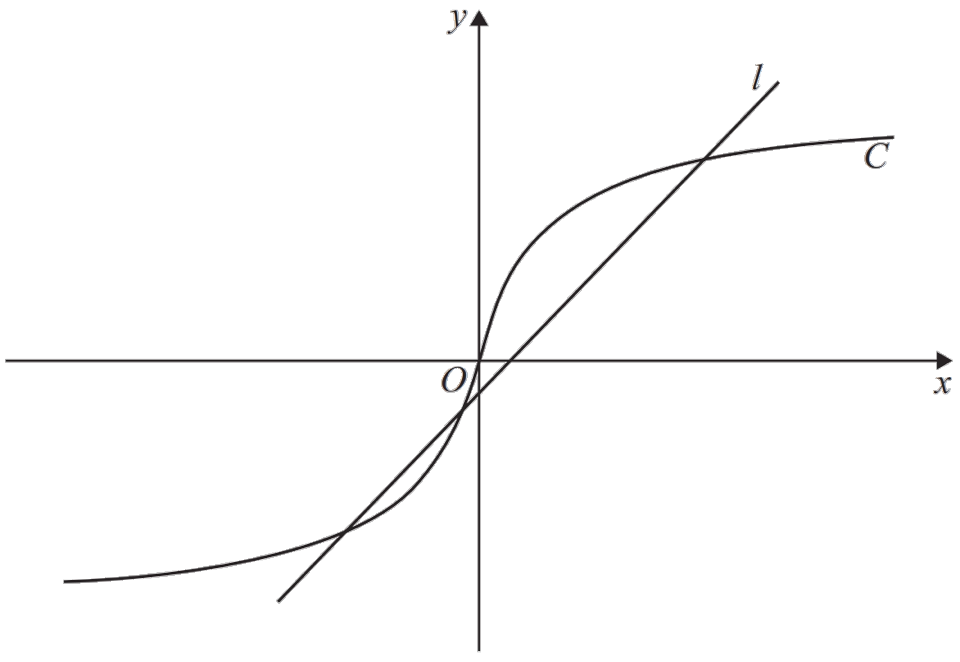
Figure 2 Figure 2 shows a sketch of the curve C C C
y = 15 x ∣ x ∣ + 4 \begin{align*}
y = \frac{15x}{|x| + 4}
\end{align*} y = ∣ x ∣ + 4 15 x and the line l l l y = x − 2 y = x - 2 y = x − 2
(a) Use algebra to determine the exact values of x x x
x − 2 > 15 x ∣ x ∣ + 4 \begin{align*}
x - 2 > \frac{15x}{|x| + 4}
\end{align*} x − 2 > ∣ x ∣ + 4 15 x (6)
(b) Hence use algebra to determine the exact values of x x x
∣ x − 2 ∣ > ∣ 15 x ∣ ∣ x ∣ + 4 \begin{align*}
|x - 2| > \frac{|15x|}{|x| + 4}
\end{align*} ∣ x − 2∣ > ∣ x ∣ + 4 ∣15 x ∣ (4)
解答
(a)
We are solving the inequality:
x − 2 > 15 x ∣ x ∣ + 4 \begin{align*}
x - 2 > \frac{15x}{|x| + 4}
\end{align*} x − 2 > ∣ x ∣ + 4 15 x Case 1: x > 0 x > 0 x > 0 ∣ x ∣ = x |x| = x ∣ x ∣ = x
x − 2 > 15 x x + 4 \begin{align*}
x - 2 > \frac{15x}{x + 4}
\end{align*} x − 2 > x + 4 15 x Since x > 0 x > 0 x > 0 x + 4 > 0 x + 4 > 0 x + 4 > 0 x + 4 x + 4 x + 4
( x − 2 ) ( x + 4 ) > 15 x x 2 + 2 x − 8 > 15 x x 2 − 13 x − 8 > 0 \begin{align*}
(x - 2)(x + 4)
> &\,15x\\[4mm]
x^2 + 2x - 8
> &\,15x\\[4mm]
x^2 - 13x - 8
> &\,0
\end{align*} ( x − 2 ) ( x + 4 ) > x 2 + 2 x − 8 > x 2 − 13 x − 8 > 15 x 15 x 0 Solving x 2 − 13 x − 8 = 0 x^2 - 13x - 8 = 0 x 2 − 13 x − 8 = 0
x = 13 ± ( − 13 ) 2 − 4 ( 1 ) ( − 8 ) 2 = 13 ± 201 2 \begin{align*}
x = \frac{13 \pm \sqrt{(-13)^2 - 4(1)(-8)}}{2} = \frac{13 \pm \sqrt{201}}{2}
\end{align*} x = 2 13 ± ( − 13 ) 2 − 4 ( 1 ) ( − 8 ) = 2 13 ± 201 The quadratic is positive for x < 13 − 201 2 x < \frac{13 - \sqrt{201}}{2} x < 2 13 − 201 x > 13 + 201 2 x > \frac{13 + \sqrt{201}}{2} x > 2 13 + 201 x > 0 x > 0 x > 0 x > 13 + 201 2 x > \frac{13 + \sqrt{201}}{2} x > 2 13 + 201
Case 2: x < 0 x < 0 x < 0 ∣ x ∣ = − x |x| = -x ∣ x ∣ = − x
x − 2 > 15 x − x + 4 \begin{align*}
x - 2 > \frac{15x}{-x + 4}
\end{align*} x − 2 > − x + 4 15 x Since x < 0 x < 0 x < 0 − x + 4 > 0 -x + 4 > 0 − x + 4 > 0 − x + 4 -x + 4 − x + 4
( x − 2 ) ( − x + 4 ) > 15 x − x 2 + 6 x − 8 > 15 x x 2 + 9 x + 8 < 0 ( x + 8 ) ( x + 1 ) < 0 \begin{align*}
(x - 2)(-x + 4)
> &\,15x\\[4mm]
-x^2 + 6x - 8
> &\,15x\\[4mm]
x^2 + 9x + 8
< &\,0\\[4mm]
(x + 8)(x + 1)
< &\,0
\end{align*} ( x − 2 ) ( − x + 4 ) > − x 2 + 6 x − 8 > x 2 + 9 x + 8 < ( x + 8 ) ( x + 1 ) < 15 x 15 x 0 0 This gives − 8 < x < − 1 -8 < x < -1 − 8 < x < − 1 x < 0 x < 0 x < 0
Therefore, the set of values for x x x
− 8 < x < − 1 or x > 13 + 201 2 \begin{align*}
-8 < x < -1 \quad \text{or} \quad x > \frac{13 + \sqrt{201}}{2}
\end{align*} − 8 < x < − 1 or x > 2 13 + 201
(b)
We want to find x x x
∣ x − 2 ∣ > ∣ 15 x ∣ x ∣ + 4 ∣ \begin{align*}
|x - 2| > \left| \frac{15x}{|x| + 4} \right|
\end{align*} ∣ x − 2∣ > ∣ x ∣ + 4 15 x This inequality splits into:
x − 2 > 15 x ∣ x ∣ + 4 x - 2 > \frac{15x}{|x| + 4} x − 2 > ∣ x ∣ + 4 15 x x − 2 < − 15 x ∣ x ∣ + 4 x - 2 < -\frac{15x}{|x| + 4} x − 2 < − ∣ x ∣ + 4 15 x
From part (a), x − 2 > 15 x ∣ x ∣ + 4 x - 2 > \frac{15x}{|x| + 4} x − 2 > ∣ x ∣ + 4 15 x − 8 < x < − 1 or x > 13 + 201 2 -8 < x < -1 \quad \text{or} \quad x > \frac{13 + \sqrt{201}}{2} − 8 < x < − 1 or x > 2 13 + 201
Now we solve x − 2 < − 15 x ∣ x ∣ + 4 x - 2 < -\frac{15x}{|x| + 4} x − 2 < − ∣ x ∣ + 4 15 x
Case 1: x > 0 x > 0 x > 0 ∣ x ∣ = x |x| = x ∣ x ∣ = x
x − 2 < − 15 x x + 4 \begin{align*}
x - 2 < -\frac{15x}{x + 4}
\end{align*} x − 2 < − x + 4 15 x Multiplying by x + 4 x + 4 x + 4
x 2 + 2 x − 8 < − 15 x x 2 + 17 x − 8 < 0 \begin{align*}
x^2 + 2x - 8
< &\,-15x\\[4mm]
x^2 + 17x - 8
< &\,0
\end{align*} x 2 + 2 x − 8 < x 2 + 17 x − 8 < − 15 x 0 Solving x 2 + 17 x − 8 = 0 x^2 + 17x - 8 = 0 x 2 + 17 x − 8 = 0
x = − 17 ± 17 2 − 4 ( 1 ) ( − 8 ) 2 = − 17 ± 321 2 \begin{align*}
x = \frac{-17 \pm \sqrt{17^2 - 4(1)(-8)}}{2} = \frac{-17 \pm \sqrt{321}}{2}
\end{align*} x = 2 − 17 ± 1 7 2 − 4 ( 1 ) ( − 8 ) = 2 − 17 ± 321 We require − 17 − 321 2 < x < − 17 + 321 2 \frac{-17 - \sqrt{321}}{2} < x < \frac{-17 + \sqrt{321}}{2} 2 − 17 − 321 < x < 2 − 17 + 321 x > 0 x > 0 x > 0 0 < x < − 17 + 321 2 0 < x < \frac{-17 + \sqrt{321}}{2} 0 < x < 2 − 17 + 321
Case 2: x < 0 x < 0 x < 0 ∣ x ∣ = − x |x| = -x ∣ x ∣ = − x
x − 2 < − 15 x − x + 4 \begin{align*}
x - 2 < -\frac{15x}{-x + 4}
\end{align*} x − 2 < − − x + 4 15 x Multiplying by − x + 4 -x + 4 − x + 4
− x 2 + 6 x − 8 < − 15 x x 2 − 21 x + 8 > 0 \begin{align*}
-x^2 + 6x - 8
< &\,-15x\\[4mm]
x^2 - 21x + 8
> &\,0
\end{align*} − x 2 + 6 x − 8 < x 2 − 21 x + 8 > − 15 x 0 Solving x 2 − 21 x + 8 = 0 x^2 - 21x + 8 = 0 x 2 − 21 x + 8 = 0 21 ± 409 2 > 0 \frac{21 \pm \sqrt{409}}{2} > 0 2 21 ± 409 > 0 x < 0 x < 0 x < 0 x < 0 x < 0 x < 0
Wait, there is an overlap. Since we also have C : y = 15 x ∣ x ∣ + 4 C: y = \frac{15x}{|x|+4} C : y = ∣ x ∣ + 4 15 x l : y = x − 2 l: y = x - 2 l : y = x − 2 x < − 8 x < -8 x < − 8 − 1 < x < − 17 + 321 2 -1 < x < \frac{-17 + \sqrt{321}}{2} − 1 < x < 2 − 17 + 321 x > 13 + 201 2 x > \frac{13 + \sqrt{201}}{2} x > 2 13 + 201
Final exact values:
x < − 8 , − 1 < x < − 17 + 321 2 , x > 13 + 201 2 \begin{align*}
x < -8, \quad -1 < x < \frac{-17 + \sqrt{321}}{2}, \quad x > \frac{13 + \sqrt{201}}{2}
\end{align*} x < − 8 , − 1 < x < 2 − 17 + 321 , x > 2 13 + 201