题目
Problem
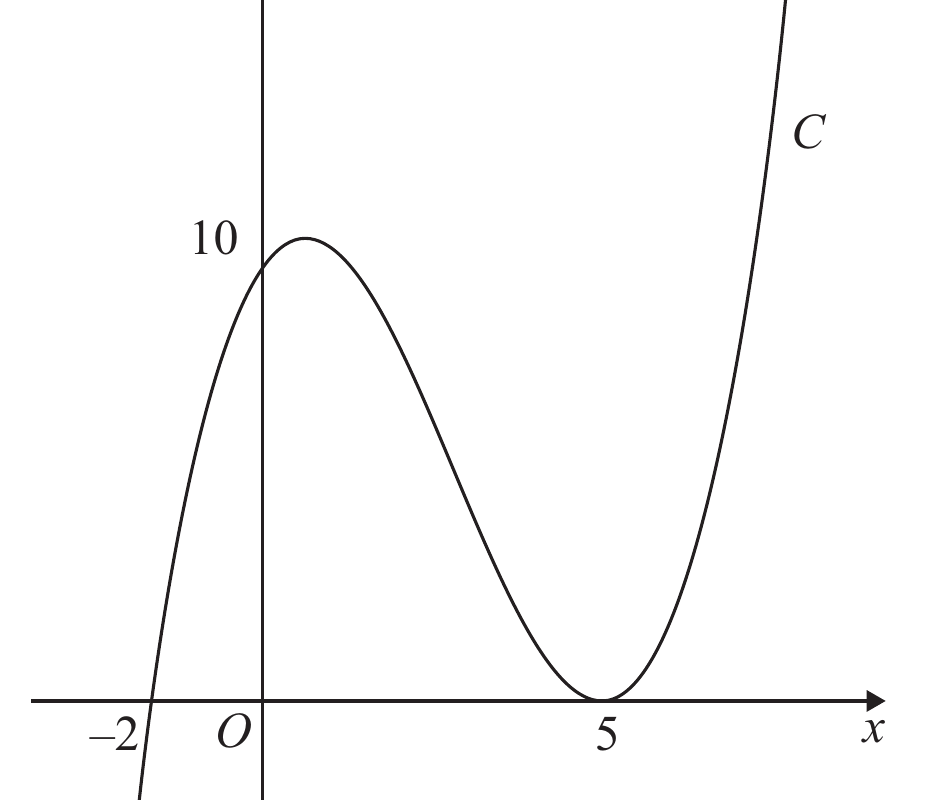
Figure 3 Figure 3 shows a sketch of the curve C C C y = f ( x ) y=f(x) y = f ( x ) f ( x ) f(x) f ( x ) x x x
The curve C C C
cuts the x x x ( − 2 , 0 ) (-2,0) ( − 2 , 0 ) y y y ( 0 , 10 ) (0,10) ( 0 , 10 )
touches the x x x ( 5 , 0 ) (5,0) ( 5 , 0 )
as shown in Figure 3.
(a) Deduce the roots of the equation
(i) f ( 1 3 x ) = 0 f\left(\dfrac13x\right)=0 f ( 3 1 x ) = 0
(ii) f ( x − 3 ) = 0 f(x-3)=0 f ( x − 3 ) = 0
(2)
(b) Find an expression for f ( x ) f(x) f ( x )
(3)
The curve C C C y = 10 ( x + 2 ) y=10(x+2) y = 10 ( x + 2 )
(c) Use algebra to find the exact x x x
(4)
解答
(a)
解法一
思路
展开
从图像读出 f ( x ) = 0 f(x)=0 f ( x ) = 0 x = − 2 x=-2 x = − 2 x = 5 x=5 x = 5 x = 5 x=5 x = 5
答题过程
展开
The roots of f ( x ) = 0 f(x)=0 f ( x ) = 0
x = − 2 , x = 5 \begin{align*}
x=-2,\quad x=5
\end{align*} x = − 2 , x = 5 For f ( 1 3 x ) = 0 f\left(\dfrac13x\right)=0 f ( 3 1 x ) = 0
1 3 x = − 2 or 1 3 x = 5 \begin{align*}
\frac13x=-2
\quad\text{or}\quad
\frac13x=5
\end{align*} 3 1 x = − 2 or 3 1 x = 5 so
x = − 6 , 15 \begin{align*}
x=-6,\quad 15
\end{align*} x = − 6 , 15 For f ( x − 3 ) = 0 f(x-3)=0 f ( x − 3 ) = 0
x − 3 = − 2 or x − 3 = 5 \begin{align*}
x-3=-2
\quad\text{or}\quad
x-3=5
\end{align*} x − 3 = − 2 or x − 3 = 5 so
x = 1 , 8 \begin{align*}
x=1,\quad 8
\end{align*} x = 1 , 8
(b)
解法一
思路
展开
因为曲线在 x = − 2 x=-2 x = − 2 x x x x = 5 x=5 x = 5 x x x x = − 2 x=-2 x = − 2 x = 5 x=5 x = 5 y y y ( 0 , 10 ) (0,10) ( 0 , 10 )
答题过程
展开
Since the curve cuts the x x x ( − 2 , 0 ) (-2,0) ( − 2 , 0 ) x x x ( 5 , 0 ) (5,0) ( 5 , 0 )
f ( x ) = k ( x + 2 ) ( x − 5 ) 2 \begin{align*}
f(x)=k(x+2)(x-5)^2
\end{align*} f ( x ) = k ( x + 2 ) ( x − 5 ) 2 Using ( 0 , 10 ) (0,10) ( 0 , 10 )
10 = k ( 0 + 2 ) ( 0 − 5 ) 2 10 = 50 k k = 1 5 \begin{align*}
10
=&\,
k(0+2)(0-5)^2\\[3mm]
10
=&\,
50k\\[3mm]
k
=&\,
\frac15
\end{align*} 10 = 10 = k = k ( 0 + 2 ) ( 0 − 5 ) 2 50 k 5 1 Therefore
f ( x ) = 1 5 ( x + 2 ) ( x − 5 ) 2 \begin{align*}
f(x)=\frac15(x+2)(x-5)^2
\end{align*} f ( x ) = 5 1 ( x + 2 ) ( x − 5 ) 2
(c)
解法一
思路
展开
交点满足 f ( x ) = 10 ( x + 2 ) f(x)=10(x+2) f ( x ) = 10 ( x + 2 ) ( x + 2 ) (x+2) ( x + 2 ) x = − 2 x=-2 x = − 2
答题过程
展开
At the points of intersection,
1 5 ( x + 2 ) ( x − 5 ) 2 = 10 ( x + 2 ) \begin{align*}
\frac15(x+2)(x-5)^2=10(x+2)
\end{align*} 5 1 ( x + 2 ) ( x − 5 ) 2 = 10 ( x + 2 ) Bring all terms to one side:
( x + 2 ) [ 1 5 ( x − 5 ) 2 − 10 ] = 0 \begin{align*}
(x+2)
\left[
\frac15(x-5)^2-10
\right]
=0
\end{align*} ( x + 2 ) [ 5 1 ( x − 5 ) 2 − 10 ] = 0 Therefore one solution is
x = − 2 \begin{align*}
x=-2
\end{align*} x = − 2 For the other two solutions,
1 5 ( x − 5 ) 2 − 10 = 0 ( x − 5 ) 2 = 50 x − 5 = ± 5 2 \begin{align*}
\frac15(x-5)^2-10
=&\,0\\[3mm]
(x-5)^2
=&\,50\\[3mm]
x-5
=&\,\pm5\sqrt2
\end{align*} 5 1 ( x − 5 ) 2 − 10 = ( x − 5 ) 2 = x − 5 = 0 50 ± 5 2 So
x = 5 ± 5 2 \begin{align*}
x=5\pm5\sqrt2
\end{align*} x = 5 ± 5 2 The three exact x x x
− 2 , 5 − 5 2 , 5 + 5 2 \begin{align*}
\boxed{-2,\quad 5-5\sqrt2,\quad 5+5\sqrt2}
\end{align*} − 2 , 5 − 5 2 , 5 + 5 2