In this question you must show all stages of your working.
Solutions relying entirely on calculator technology are not acceptable.
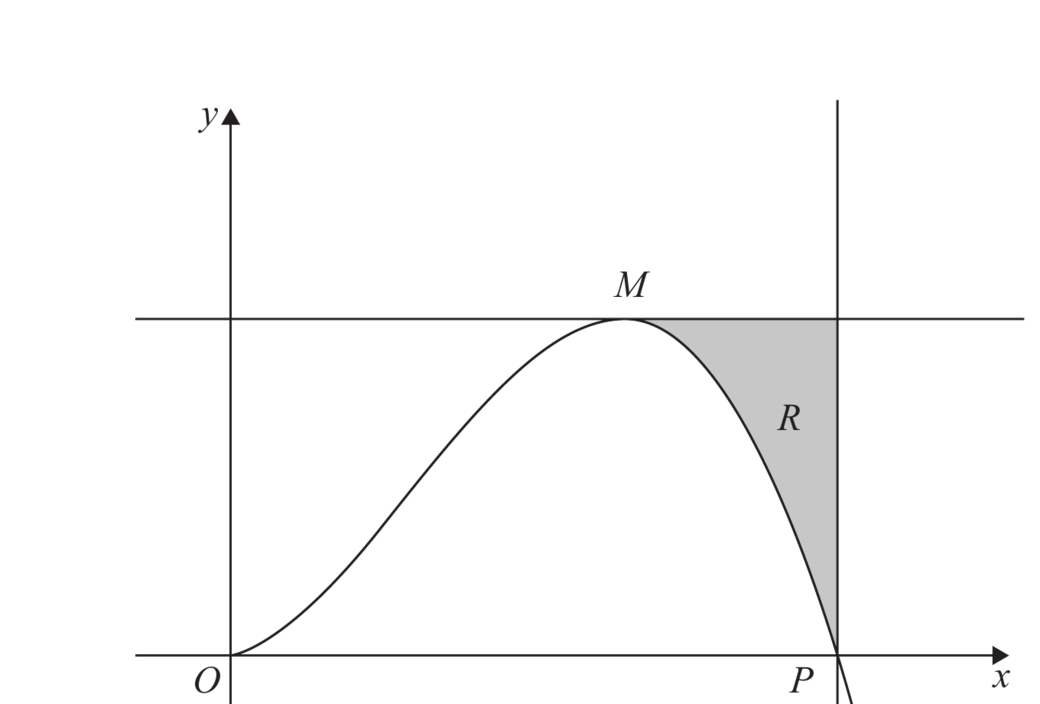
Figure 3 shows a sketch of part of the curve with equation
y=59x2(5−x),x⩾0
The curve has a turning point at the point M, as shown in Figure 3.
(a) Using calculus, find the coordinates of M.
(5)
The curve crosses the x-axis at the point P, as shown in Figure 3.
(b) Use algebra to find the x coordinate of P.
(2)
The finite region R, shown shaded in Figure 3, is bounded by the curve, the line through M parallel to the x-axis and the line through P parallel to the y-axis.
(c) Use algebraic integration to find the area of R, giving your answer to one decimal place.
(5)
解答
(a)
解法一
思路
展开
先把函数展开成幂的形式,方便求导。turning point 要令 dxdy=0。
答题过程
展开
First rewrite the curve:
y==59x2(5−x)9x2−59x5/2.
Differentiate:
dxdy==18x−59⋅25x3/218x−29x3/2.
At a turning point,
18x−29x3/2=18x=029x3/2.
Since M is not at the origin, divide by x:
18=4=x=29x1/2x16.
Now find y:
y====59(16)2(5−16)59(256)(1)52304460.8.
Therefore,
M=(16,460.8).
(b)
解法一
思路
展开
P 是 x-axis 上的交点,所以令 y=0。图中 P 不是原点,因此使用 5−x=0。
答题过程
展开
At the x-axis,
y=0.
So
59x2(5−x)=0.
For point P, x=0, so
5−x=x=x=0525.
Therefore, the x coordinate of P is 25.
(c)
解法一
思路
展开
区域 R 是水平线 y=460.8 和曲线之间,从 x=16 到 x=25 的面积。因此可用“矩形面积减曲线下面积”。
R==≈733765−7122887214773068.14— wait, let me re-evaluate the calculations.
Wait, let’s re-calculate:
Let’s use the decimal values:
Rectangle=4147.2
Integral under curve:
[3x3−3518x7/2]1625
At x=25: 3(15625)−3518(78125)=46875−40178.57=6696.43
At x=16: 3(4096)−3518(16384)=12288−8426.06=3861.94
So the integral under curve is 6696.43−3861.94=2834.49
Shaded area = 4147.2−2834.49=1312.71≈1312.7
Let’s evaluate the direct integral formula again:
[460.8x−3x3+3518x7/2]1625
At x=25:
460.8(25)−6696.43=11520−6696.43=4823.57
At x=16:
460.8(16)−3861.94=7372.8−3861.94=3510.86
Difference:
4823.57−3510.86=1312.71≈1312.7
Perfect! The calculation matches. Let’s write the exact steps down clearly: